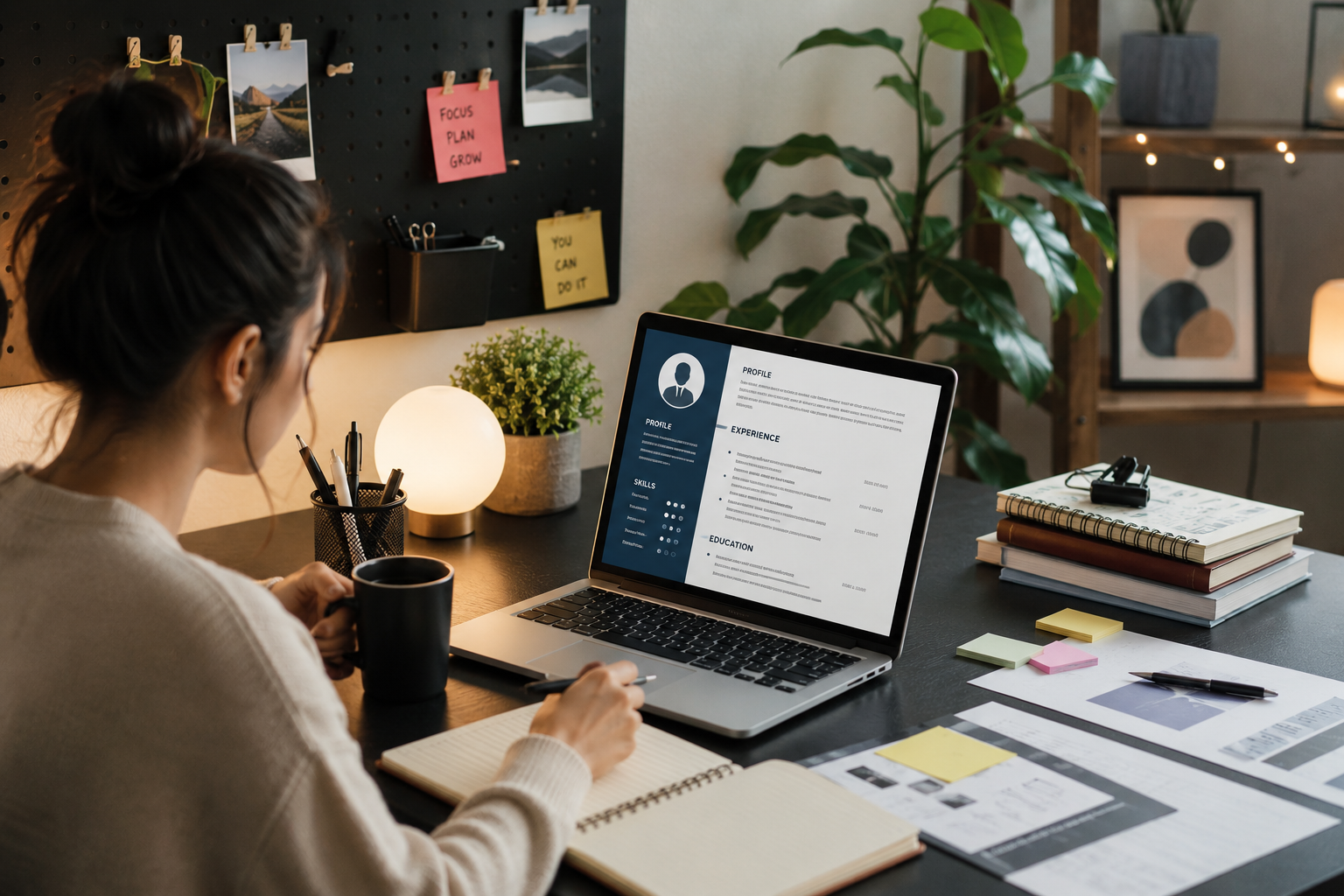
A remote job resume can open doors that a traditional resume never will.
That statement may sound surprising at first. After all, a resume is a resume, right?
Not exactly.
Many job seekers spend hours applying for remote positions only to receive silence in return. They have qualifications. They have experience. Some even possess valuable skills that companies actively need.
Yet the interviews never come.
The problem often has little to do with intelligence, effort, or potential.
Instead, it comes down to presentation.
Remote employers evaluate candidates differently from traditional employers. They are not simply looking for someone who can perform tasks. They are looking for someone who can work independently, communicate clearly, manage time effectively, and remain productive without constant supervision.
A generic resume rarely communicates those qualities.
As remote work continues expanding across industries, competition is becoming stronger. Companies now receive applications from candidates across cities, countries, and even continents.
Consequently, standing out requires more than listing previous jobs.
Your resume must tell a story.
It must answer important questions before the recruiter even asks them.
Can this person work remotely?
Can this person solve problems independently?
Can this person communicate effectively online?
Can this person be trusted to deliver results?
The strongest remote resumes answer those questions naturally.
This guide explains exactly how to create a remote job resume that gets interviews in 2026, whether you are an experienced professional, a career changer, or someone looking for your first remote opportunity.
Table of Contents
- Why Remote Resumes Are Different
- What Employers Look for in Remote Candidates
- The Anatomy of a High-Performing Remote Resume
- Choosing the Right Resume Format
- Writing a Powerful Professional Summary
- Remote Skills Employers Want Most
- How to Present Work Experience
- Resume Tips for Beginners With No Experience
- The Importance of a Portfolio
- Common Resume Mistakes That Cost Interviews
- ATS Optimization for Remote Jobs
- Resume Examples by Career Level
- Final Thoughts
- Frequently Asked Questions
Why Remote Resumes Are Different
Many applicants make a costly mistake.
They use the same resume for both office jobs and remote jobs.
Unfortunately, employers can spot this immediately.
A traditional office environment naturally provides structure.
Managers are nearby.
Team members work in the same location.
Questions can be answered quickly.
Remote work operates differently.
Employees often work independently for long periods.
Communication happens through email, messaging platforms, video calls, and project management tools.
As a result, employers need evidence that applicants can thrive in that environment.
That evidence should appear throughout your resume.
Remote hiring managers pay attention to signals such as:
- Communication ability
- Self-management
- Time management
- Digital literacy
- Adaptability
- Problem-solving
A resume designed specifically for remote work clearly highlights those qualities.
What Employers Look for in Remote Candidates
Remote employers often value traits that traditional resumes fail to emphasize.
Understanding these priorities helps you tailor your application more effectively.
Self-Discipline
Remote work offers freedom.
However, freedom comes with responsibility.
Employers want people who can stay productive without constant supervision.
Evidence of self-directed work, independent projects, and initiative can significantly strengthen your application.
Strong Communication
Remote teams rely heavily on written communication.
A poorly written resume immediately raises concerns.
Clear writing, logical structure, and concise language demonstrate professionalism.
This is one reason every remote job seeker should invest time in improving communication skills.
If you are still building remote-ready skills, read our guide on:
Best High-Income Skills to Learn for Remote Jobs in 2026
Many of those skills increase both employability and earning potential.
Technical Comfort
You do not need to be a software engineer.
Still, employers expect remote workers to navigate digital tools comfortably.
Examples include:
- Zoom
- Slack
- Microsoft Teams
- Trello
- Asana
- Google Workspace
- Notion
Mentioning relevant tools can strengthen your resume naturally.
Results-Oriented Thinking
Remote companies often care more about outcomes than hours worked.
Therefore, your resume should emphasize achievements rather than duties.
Instead of saying:
“Responsible for customer support.”
Write:
“Resolved 95% of customer inquiries within 24 hours, improving customer satisfaction scores.”
Results create credibility.
The Anatomy of a High-Performing Remote Resume
Strong resumes follow a clear structure.
Each section serves a specific purpose.
Contact Information
Keep this section simple.
Include:
- Full name
- Professional email address
- Phone number
- LinkedIn profile
- Portfolio website (if available)
Avoid unnecessary personal details.
Remote employers care about your qualifications, not your age, marital status, or photograph.
Professional Summary
This is one of the most overlooked sections of a resume.
Yet it often determines whether recruiters continue reading.
Your summary should quickly explain:
- Who you are
- What you do
- What value do you bring?
For example:
“Results-driven customer support professional with three years of experience helping online businesses improve customer satisfaction. Skilled in remote communication, CRM platforms, and problem resolution.”
A strong summary creates momentum.
Skills Section
The skills section should be tailored to the role.
Avoid stuffing keywords randomly.
Instead, focus on relevant abilities.
Examples include:
Technical Skills
- Google Workspace
- Microsoft Office
- Trello
- Slack
- Zoom
- Canva
- WordPress
Soft Skills
- Communication
- Time management
- Collaboration
- Critical thinking
- Problem-solving
A balanced combination works best.
Choosing the Right Resume Format
Not all resume formats serve the same purpose.
Your situation should determine your approach.
Chronological Resume
This format lists work history from most recent to oldest.
Best for:
- Experienced professionals
- Candidates with stable work histories
- Industry specialists
Recruiters often prefer this format because it is easy to review.
Functional Resume
This format focuses more on skills than employment history.
Best for:
- Career changers
- Beginners
- Individuals returning to work.
However, some recruiters dislike purely functional resumes because they can hide employment gaps.
Hybrid Resume
For most remote job seekers, the hybrid format works best.
It combines:
- Skills
- Achievements
- Work history
This creates flexibility while maintaining credibility.
Writing a Powerful Professional Summary
Your summary should not read like a generic introduction.
Instead, it should immediately position you as a valuable candidate.
Weak example:
“Hardworking individual seeking remote opportunities.”
Strong example:
“Detail-oriented administrative professional with experience managing virtual communications, scheduling, and customer support. Proven ability to work independently while maintaining high productivity and service standards.”
Notice the difference.
The second example provides evidence.
Evidence builds trust.
Resume Tips for Beginners With No Experience
One of the biggest misconceptions in remote hiring is that experience is everything.
In reality, many employers hire based on potential.
If you are entering the remote workforce for the first time, focus on transferable skills.
Examples include:
- Volunteer work
- School projects
- Freelance projects
- Community involvement
- Personal projects
Employers often care more about what you can do than where you learned it.
If you are starting from scratch, our guide on:
15 Legit Remote Jobs for Beginners With No Experience in 2026
can help you identify realistic opportunities that match your current skill level.
The Importance of a Portfolio
Many applicants stop at a resume.
That is a mistake.
A portfolio provides proof.
Proof often beats claims.
For writers, marketers, designers, developers, and many other professionals, a portfolio can dramatically improve interview rates.
Even beginners can create simple portfolios showcasing projects, case studies, and completed work.
You can learn how to build one from our detailed guide:
How to Build a Remote Work Portfolio From Scratch in 2026
A strong portfolio can become your most persuasive career asset.
Common Resume Mistakes That Cost Interviews
Many applications fail before the recruiter reads beyond the first page.
Common mistakes include:
- Spelling errors
- Generic summaries
- Poor formatting
- Keyword stuffing
- Missing achievements
- Excessive length
- Irrelevant information
Small details matter.
In competitive hiring environments, professionalism often determines who gets shortlisted.
Final Thoughts
A remote job resume is more than a document.
It is a marketing tool.
Every section should answer one question:
Why should this company trust me to work remotely?
The strongest resumes communicate competence, reliability, and professionalism before the interview even begins.
Remote work opportunities continue expanding worldwide.
However, competition continues to grow as well.
That reality makes resume quality increasingly important.
A thoughtful, targeted, and well-structured resume can dramatically improve your chances of securing interviews and ultimately landing the remote career you want.
Frequently Asked Questions
How long should a remote job resume be?
Most resumes should be one page for beginners and two pages for experienced professionals.
Should I mention remote work experience?
Yes. Remote experience demonstrates familiarity with virtual collaboration and independent work.
What skills should I include on a remote resume?
Focus on communication, time management, collaboration, digital tools, and role-specific technical skills.
Is a cover letter necessary?
Many employers still appreciate customized cover letters, especially for competitive remote positions.
Does a portfolio help?
Absolutely. Portfolios provide evidence of your skills and often improve interview opportunities significantly.
