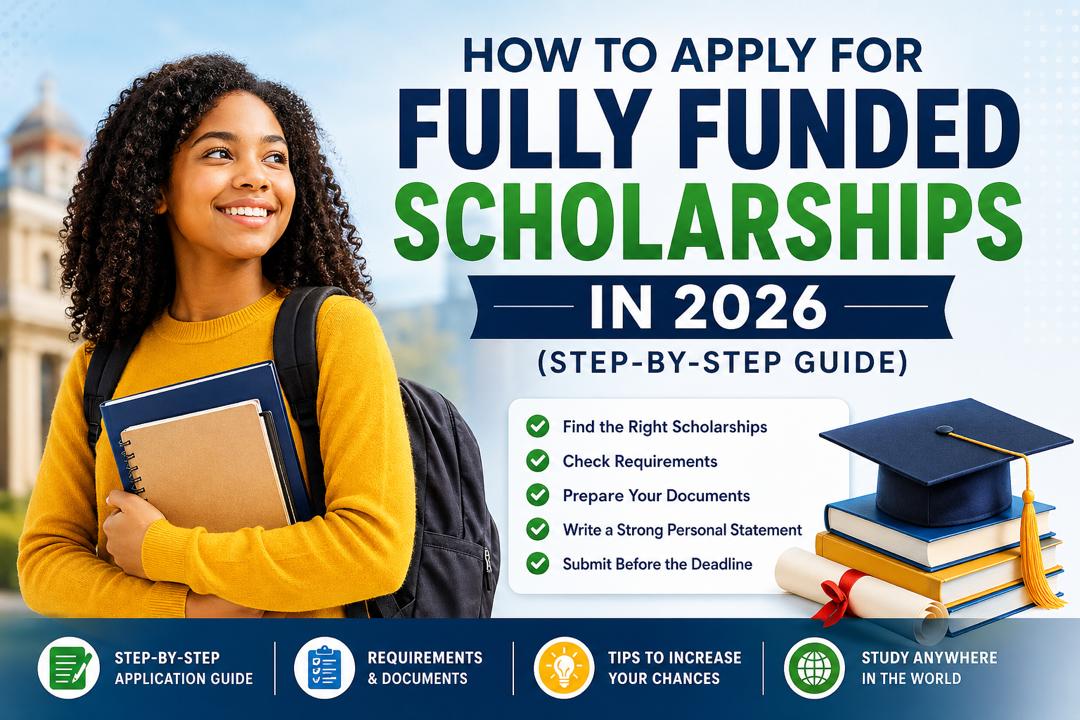
Applying for fully funded scholarships can feel confusing, especially when you do not know where to begin.
You may find an opportunity that covers tuition, accommodation, travel, and other educational expenses, but then questions start coming:
“Do I qualify?”
“What documents do I need?”
“How do I create a strong application?”
Many people miss scholarship opportunities not because they are incapable, but because the process feels overwhelming or unclear.
The truth is that successful scholarship applications usually come down to preparation, attention to detail, and understanding what scholarship committees are looking for.
This guide explains how to apply for fully funded scholarships step by step, the documents you need, common mistakes to avoid, and practical ways to improve your chances.
What Is a Fully Funded Scholarship?
A fully funded scholarship is a financial award designed to cover most or all major costs related to studying.
Unlike partial scholarships that only cover part of your expenses, fully funded scholarships usually provide support such as:
- Full tuition fees
- Accommodation
- Monthly living allowance
- Travel expenses (depending on the program)
- Health insurance (for some scholarships)
The exact benefits depend on the scholarship provider, university, or country offering the opportunity.
Fully funded scholarships are highly competitive because they reduce the financial burden of education and allow students to focus more on their studies.
However, competition does not mean you should avoid applying.
Many successful applicants are not perfect candidates. They are people who carefully prepare their applications, understand requirements, and present their goals clearly.
Who Can Apply for Fully Funded Scholarships?
A common misconception is that scholarships are only available for students with perfect grades or extraordinary achievements.
While academic performance is important for many programs, scholarship committees often consider several factors, including:
- Academic background
- Personal achievements
- Leadership experience
- Community involvement
- Career goals
- Potential impact
Eligibility depends on the specific scholarship.
Some scholarships are available for:
- Undergraduate students
- Master’s students
- PhD candidates
- Researchers
- Professionals seeking further education
Before applying, always check:
- Required academic level
- Eligible countries
- Field of study requirements
- Language requirements
- Application deadlines
The goal is not to apply for every scholarship you see. It is to find opportunities that match your profile.
Step-by-Step Guide to Applying for Fully Funded Scholarships
1. Find Scholarships That Match Your Goals
The first step is finding the right opportunities.
Many applicants make the mistake of applying randomly without checking whether they meet the requirements.
Instead, focus on scholarships that match:
- Your education level
- Your chosen field
- Your country eligibility
- Your career goals
You can find scholarship opportunities through:
- Official university websites
- Government scholarship portals
- International education organizations
- Trusted scholarship databases
Always verify information from official sources and be careful with websites that request unnecessary payments or personal information.
If you are still exploring opportunities, you can also check our guide on fully funded scholarships available in 2026.
2. Read the Requirements Carefully
Before starting an application, study the requirements carefully.
Many applications are rejected because applicants:
- Miss required documents
- Apply without meeting eligibility rules.
- Ignore instructions
- Submit incomplete information
Scholarship committees usually provide clear guidelines.
Take time to understand:
- Required documents
- Essay questions
- Formatting rules
- Submission deadlines
A few extra minutes of preparation can prevent avoidable mistakes.
3. Prepare Your Documents Early
Many scholarship documents require time to obtain.
Common documents include:
- Academic transcripts
- Degree certificates
- Passport
- CV or resume
- Personal statement
- Recommendation letters
- Language test results (if required)
Create a scholarship folder where you keep:
- Updated academic records
- Certificates
- Previous achievements
- Important application details
Starting early reduces pressure and allows you to improve the quality of your application.
4. Write a Strong Personal Statement
A personal statement is one of the most important parts of many scholarship applications.
It allows the committee to understand who you are beyond your grades and documents.
A strong personal statement should explain:
- Your background
- Your goals
- Why did you choose the program
- Why you deserve consideration
- How does the opportunity connect to your plans
Avoid writing what you think reviewers want to hear.
Instead, focus on telling a clear and honest story.
A good statement shows purpose, preparation, and direction.
5. Choose Strong Recommendation Letters
Recommendation letters help scholarship committees understand your abilities from another perspective.
Choose people who know your work and can describe your strengths specifically.
Good choices may include:
- Lecturers
- Supervisors
- Employers
- Project leaders
Avoid selecting someone only because of their title.
A detailed recommendation from someone who understands your achievements is usually stronger than a general letter from someone who barely knows you.
Give your recommenders enough time and provide information about your goals so they can write a meaningful letter.
6. Complete the Application Carefully
Application forms may seem simple, but small mistakes can affect your chances.
Before submitting, check:
- Names and dates
- Uploaded documents
- Spelling errors
- Required sections
- Answers to essay questions
A strong application can lose value because of avoidable errors.
Review everything before clicking submit.
7. Submit Early and Stay Organized
Waiting until the deadline creates unnecessary risk.
Technical problems, missing documents, or unexpected issues can affect your submission.
Submit early whenever possible.
Keep track of:
- Scholarship names
- Deadlines
- Application status
- Follow-up requirements
Organization makes the process easier.
Documents You Usually Need for Scholarship Applications
Although requirements vary, many scholarships request similar documents.
Common examples include:
- Academic transcripts
- Certificates
- Passport or identification documents
- CV or resume
- Personal statement
- Recommendation letters
- Language proficiency results
Some programs may also request:
- Research proposals
- Portfolio samples
- Proof of leadership experience
- Additional essays
Always follow the exact requirements of each scholarship.
Common Scholarship Application Mistakes to Avoid
Many applicants fail because of mistakes that could have been prevented.
Avoid:
- Applying without checking eligibility
- Submitting incomplete documents
- Copying generic personal statements
- Missing deadlines
- Ignoring instructions
- Applying without researching the program
A careful application is often stronger than a rushed one.
Tips to Increase Your Chances of Getting Selected
There is no guaranteed formula for winning a scholarship, but these strategies can improve your chances.
Apply to Multiple Opportunities
Do not depend on one application.
Applying to several suitable scholarships increases your opportunities.
Focus on Quality
A well-prepared application is better than many weak applications.
Customize your essays and documents for each opportunity.
Tell Your Story Clearly
Scholarship committees want to understand your goals, motivation, and potential impact.
Be clear about who you are and where you want to go.
Start Early
Time allows you to improve your documents and avoid last-minute mistakes.
Final Thoughts
Fully funded scholarships can create opportunities for students and professionals who want to continue their education without carrying the full financial burden.
The process may seem difficult at first, but it becomes easier when broken into clear steps.
Find the right scholarship.
Prepare your documents.
Create a strong application.
Submit carefully.
Success does not usually come from applying once and hoping. It comes from preparation, consistency, and improvement with every application.
Start early, stay organized, and give yourself the best possible chance.
Frequently Asked Questions
How do I apply for fully funded scholarships step by step?
The process usually involves:
- Finding suitable scholarships
- Checking eligibility requirements
- Preparing documents
- Writing your personal statement
- Getting recommendation letters
- Completing the application
- Submitting before the deadline
Preparation is one of the biggest factors that improve application quality.
What are the requirements for fully funded scholarships?
Requirements vary, but many scholarships require:
- Academic transcripts
- Certificates
- CV
- Personal statement
- Recommendation letters
- Language test results (if required)
Some may also consider leadership experience, community involvement, or career goals.
Can I apply for fully funded scholarships without IELTS?
Yes, some scholarships and universities offer alternatives.
Depending on the program, they may accept:
- Previous education in English
- Other language tests
- Country-based exemptions
Always confirm the exact requirement before applying.
How can I increase my chances of getting a scholarship?
You can improve your chances by:
- Applying early
- Preparing strong documents
- Writing a clear personal statement
- Applying to multiple suitable opportunities
- Avoiding common mistakes
When should I start applying for scholarships?
Many applicants begin preparing 6 to 12 months before deadlines.
Early preparation gives you time to gather documents, improve essays, and complete applications properly.
Are fully funded scholarships really free?
Fully funded scholarships are designed to cover major educational expenses.
However, coverage differs between programs, so always review the scholarship details carefully.
How many scholarships should I apply for?
There is no fixed number.
Focus on applying to opportunities that match your background rather than submitting many low-quality applications.
Do I need perfect grades to get a scholarship?
Not always.
Some scholarships prioritize academic excellence, while others also consider:
- Leadership
- Personal achievements
- Goals
- Community impact
A strong overall application matters.
Can I apply for multiple scholarships at the same time?
Yes.
Applying for multiple scholarships can increase your chances, but make sure each application is properly prepared and submitted before the deadline.
